
120 Years In the Making
Masunaga has been building eyewear in Fukui since 1905. The MOC collection is what happens when a house with nothing left to prove decides to show exactly what it can do.
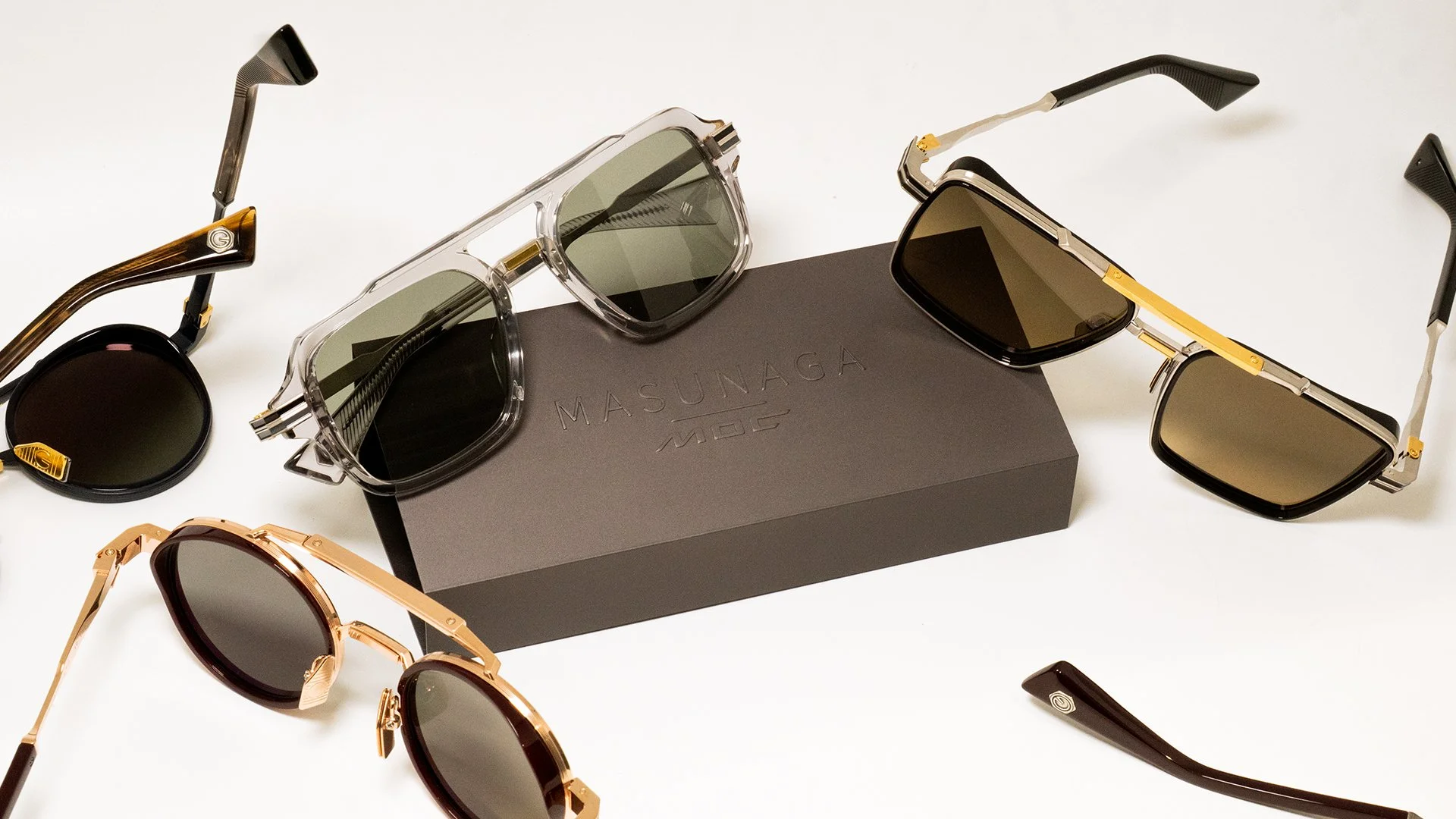
One hundred and fifty pieces per model.
One hundred authorised retailers worldwide.
Once they are gone, they are gone.
Masunaga Optical was founded in 1905 by Gozaemon Masunaga in the Sabae region of Fukui Prefecture, a snowbound corner of Japan that now produces roughly 95% of the country's eyewear. Masunaga did not just build a company. He built an industry. The region's identity, its economy, and its craft lineage exist in their current form because one man decided his community deserved a trade worth passing down. More than a century later, the house is still family-owned, still produced in Sabae, and still governed by a philosophy that has not changed in principle since the beginning:
“The frame is the product, and the frame has to be right.”
MOC stands for Masters of Craft. The name is earned, not claimed. In 2013, Masunaga became the first Japanese house to win the SILMO D'Or, the most prestigious prize in global eyewear. The collection built on that reputation by asking a different question: what does Masunaga look like when restraint is set aside entirely?


THE OBJECT
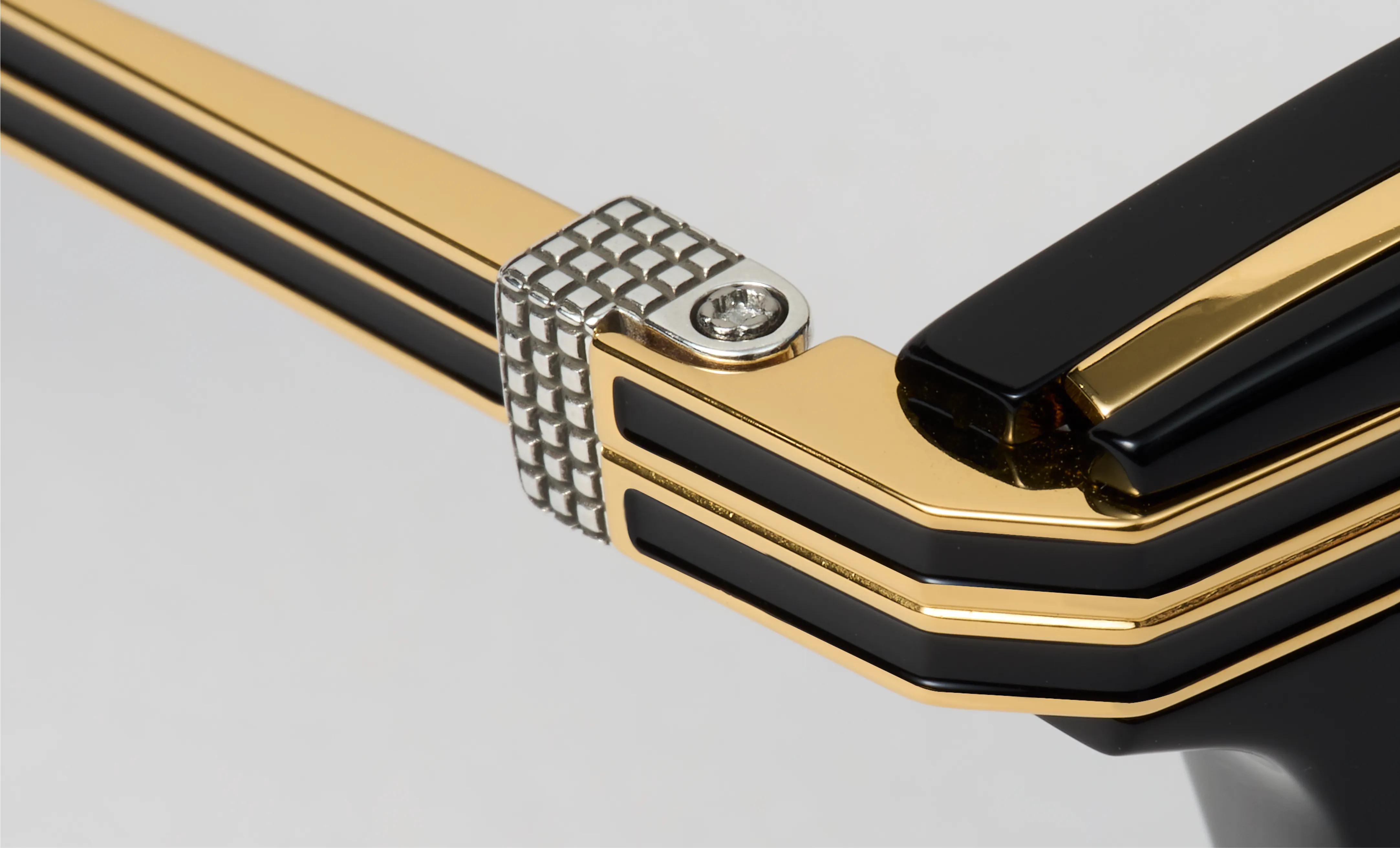
Pick up a MOC frame and the answer arrives before any explanation does. The weight is immediate. The finish is exact. The sterling silver 925 medallion set into each temple tip is cast, not stamped, its grid motif drawn from the steering wheel of a racing car, its surface hand-polished to a smoked silver finish that catches light with quiet precision. The gold plating is applied at 5 microns, ten times the industry standard, a specification that permits no correction after application. It is right or it is redone.
The acetate is sourced from Masunaga's own archive stock, including burgundy colourways that were not in general production and were reproduced specifically for MOC. Blocks are cut at 10mm, carved and hand-polished until each edge holds a mirror gloss. The nose pads are double-layered, built from four separate moulds. The titanium components are precision-milled to tolerances that most eyewear production does not require. These are not details written into a specification for marketing purposes. They are the decisions that separate a frame built to a standard from a frame built to an ideal.
The collection spans six models across optical and sunglass. The sunglasses carry the collection's most visible signatures: titanium frames with carved acetate side shields, the sterling silver medallion, the 5-micron plating. The optical frames are quieter but no less precise. Without the shields, the medallion becomes the sole ornament, and its presence becomes more considered for it. MOC 005 and 006, released to mark Masunaga's 120th anniversary, push further still: dual-layer acetate rims, gem enamel detailing, gold plating that shifts character with every angle of light. They are not commemorative editions in the passive sense. They are the sharpest statement the collection has made.
Sterling silver, defined by its grid pattern, adds a subtle yet striking accent across the bridge and temples. With its sharp contours preserved through casting rather than stamping, it carries a presence found nowhere else in eyewear.
- Sterling Silver 925
- Grid pattern detail
- Bridge and temple placement
- Cast construction, not stamped
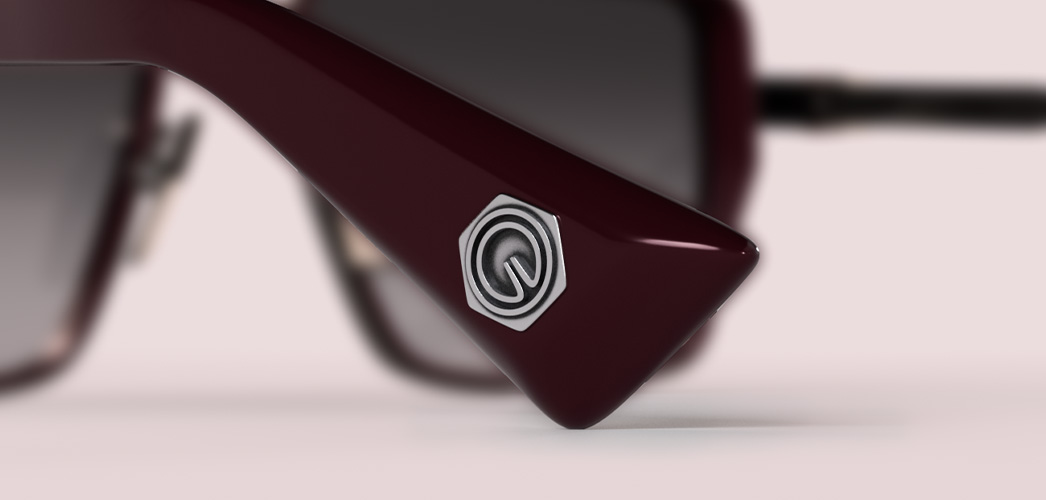
Embedded in the left temple tip, the MOC medallion is cast from solid sterling silver. Its motif is drawn from the steering wheel of a racing car. The oxidised smoked silver finish catches light with a quiet clarity that reveals itself in use, not on first inspection.
- Sterling Silver 925
- Cast construction
- Oxidised smoked silver finish
- Inspired by a racing car steering wheel
- Left temple tip placement
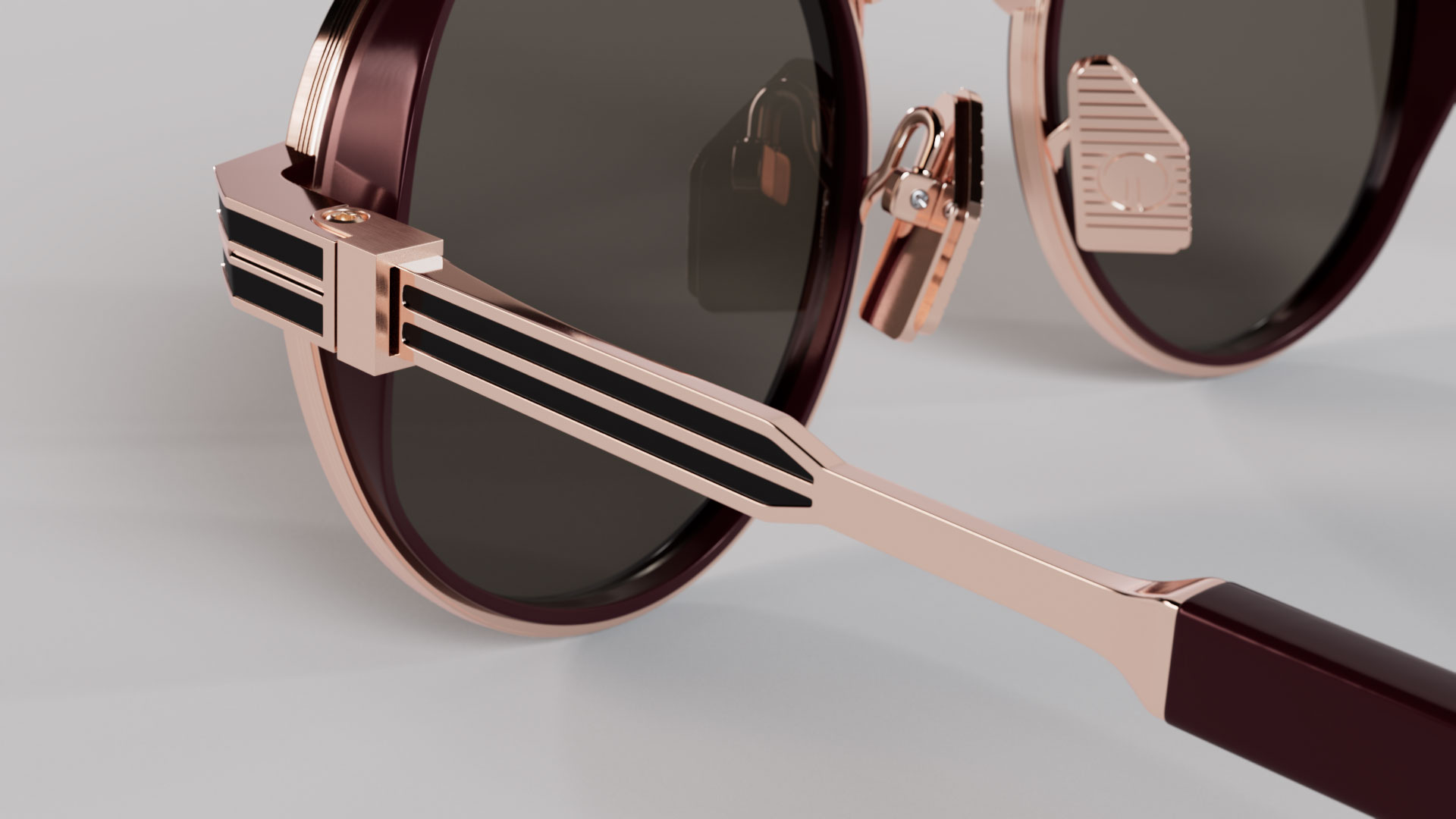
Applied across the bridge, top bar, nose pads and temples, the gold plating on every MOC frame is ten times thicker than the industry standard. Each surface is hand-polished by craftsmen before plating. There is no correction after application. It is right, or it is redone.
- 5 micron thickness
- 10 times the industry standard
- 18K / 10K / Rose Gold options
- Bridge, top bar, pads and temples
- Hand-polished before application
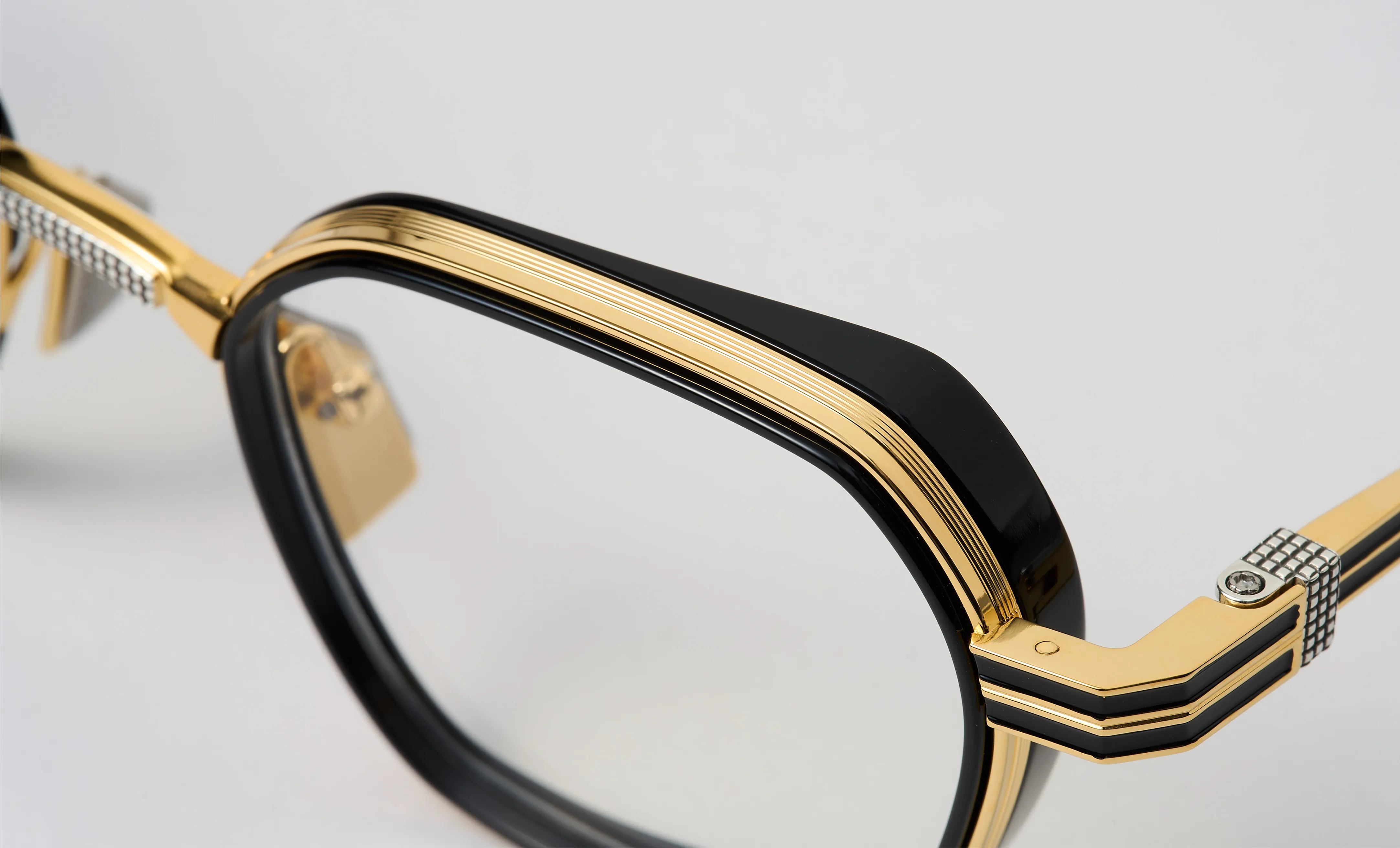
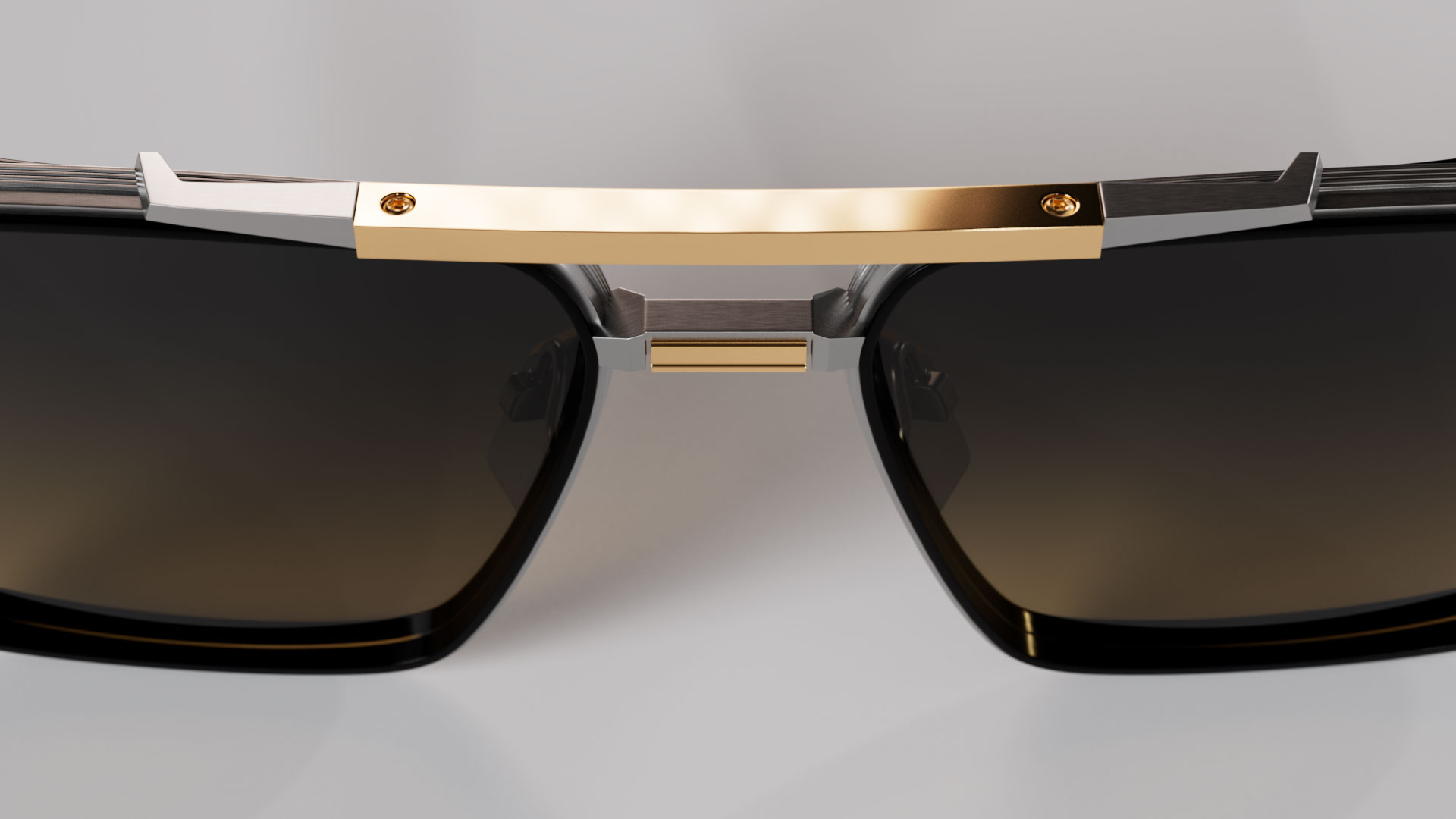
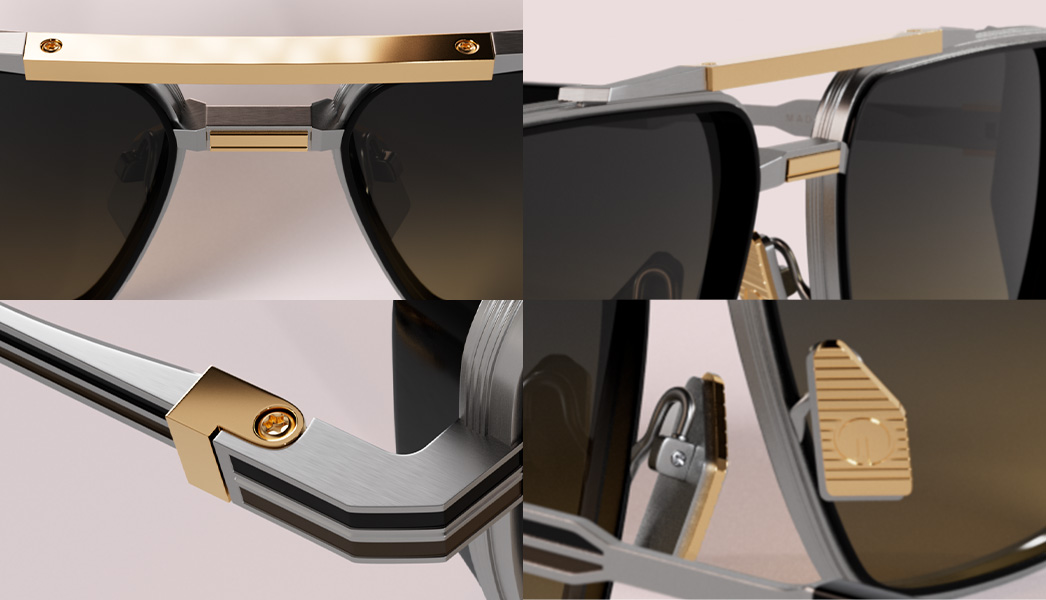
Layer upon layer of original-coloured acetate builds depth and substance. The boldly sculpted side shields are carved from blocks cut at 10mm thickness, sourced from Masunaga's own colour archive and hand-polished to a mirror edge. Each shield is a pursuit of both function and form.
- Japanese acetate
- MOC 001–004: 10.0mm thickness
- MOC 005–006: 8.0mm thickness
- Original layered colour construction
- Hand-carved and mirror-polished
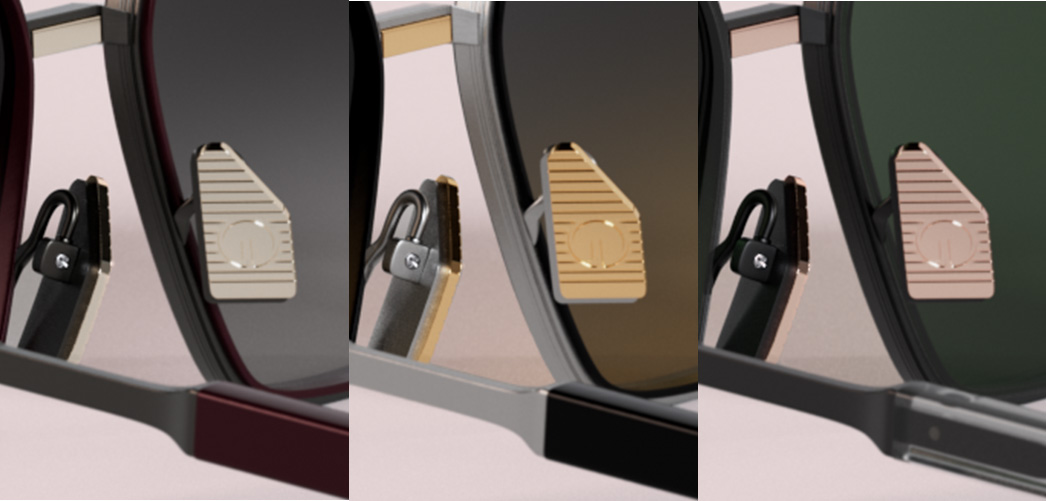
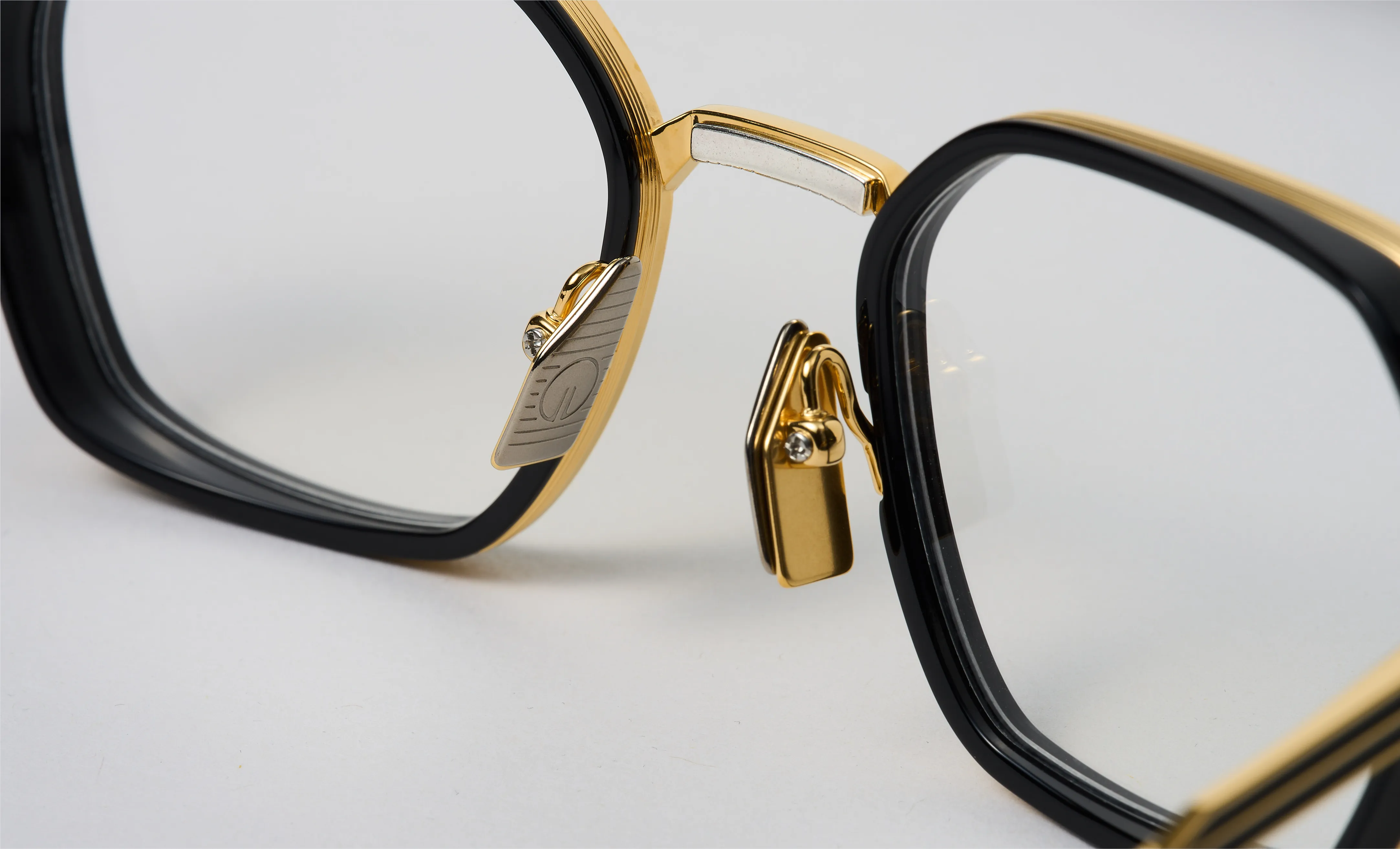
A wide nose pad with a double-layer construction, built from four separate moulds. The base pad and thickly plated main pad sit in two-colour combination, with grooves carved into the surface to reduce slippage. The parts you cannot see are held to the same standard as the parts you can.
- Two-layer construction
- Titanium base
- 5-micron gold plating
- MOC original icon detail
- Grooved surface for secure fit
“In a world where everything is available everywhere, the rarest thing is something made with genuine difficulty for its own sake.”
Ocular & Eyes is one of 100 authorised MOC retailers worldwide and the only location in Sydney carrying the full collection. No two frames from the same model are identical in the way that handmade objects never quite are. They are worth seeing in person for that reason alone.
Every MOC frame can be fitted with prescription lenses on-site using the ZEISS VISUFIT1000 centration system, ensuring that the precision of the frame is matched by the precision of what goes inside it. The collection is not restocked. Once a model sells through, it is finished.
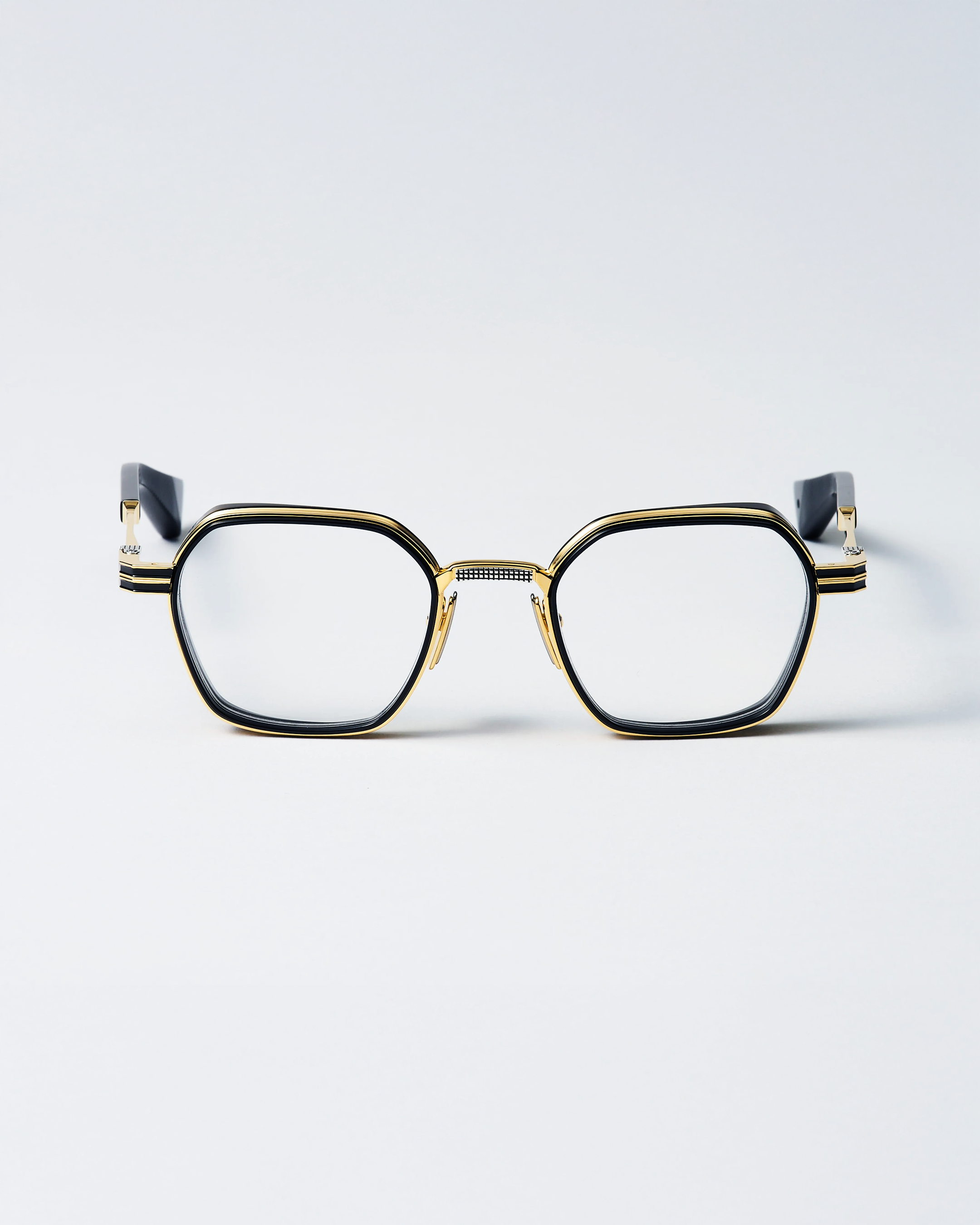
Serial 11/30.
The 120th anniversary limited edition model
Limited production of only 30 pcs — “MASTERS OF CRAFT.” [MOC 004G]
Featuring:
5 micron 18K gold plating
Laser etched ‘Edition 120’ logo
Sterling silver MOC medallion and grid pattern detail
Double shield pads
49 [] 22 - 145
Mon–Fri 9am–5:30pm · Sat 10am–5pm