
See Everything. How Multifocal Lenses Changed Vision Forever.
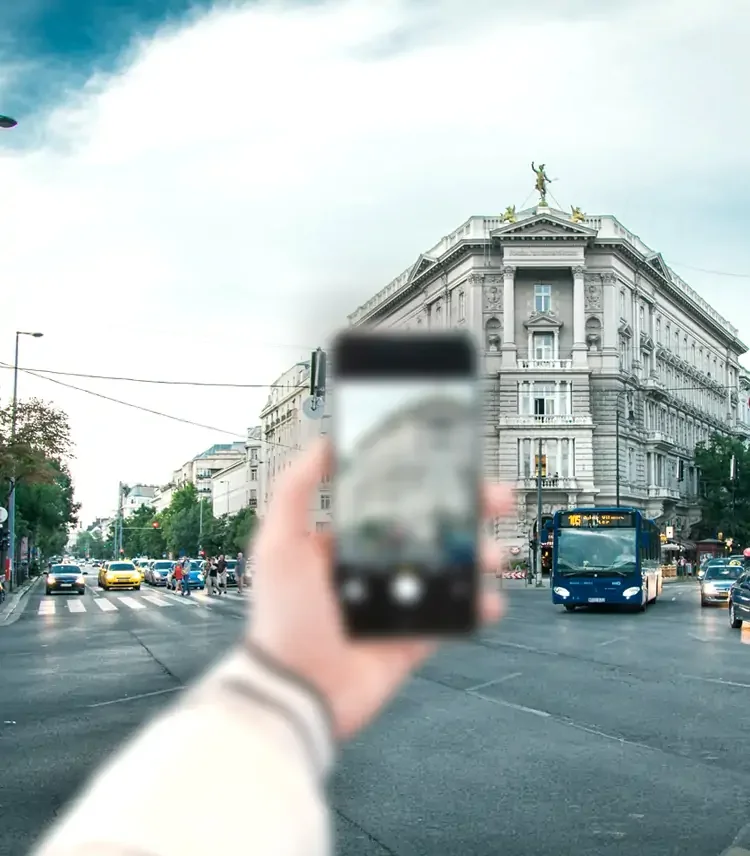
Presbyopia is the gradual loss of the eye's ability to focus on near objects. A natural consequence of the lens inside the eye stiffening with age. Unlike short-sightedness or astigmatism, which are structural, presbyopia is a process: the crystalline lens, once soft and flexible enough to change shape and shift focus, loses that elasticity over time until the muscles around it can no longer bend it into focus at close range. Most people begin to notice it in their mid-forties. It does not stop progressing until around sixty.
For most of human history, the only solution to failing near vision was a second pair of glasses. You wore one to see the world. You wore another to read it. The inconvenience was so accepted that nobody thought to question it until 1784.
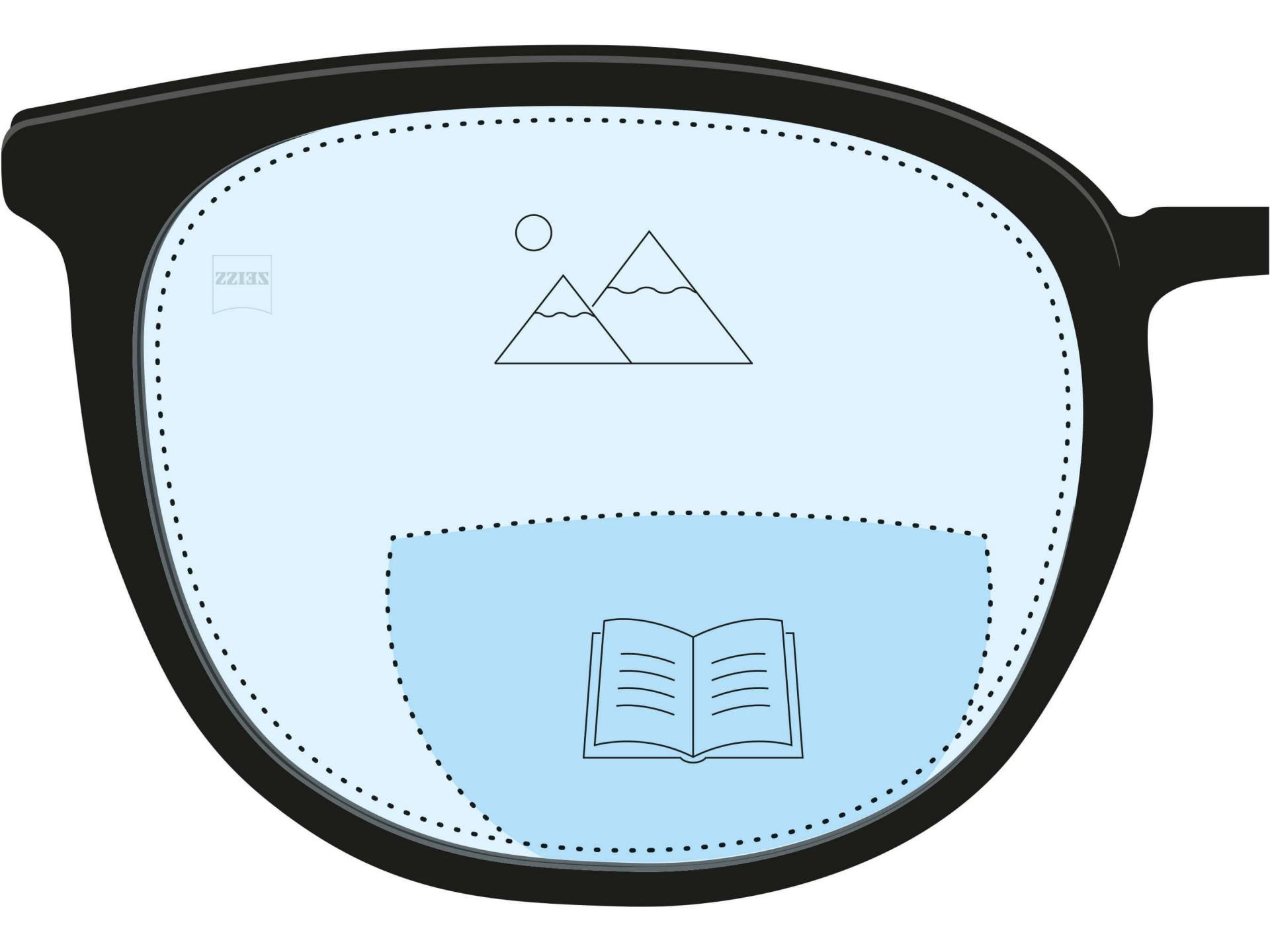
Bifocal Lens
The concept was simple and effective. The upper portion of the lens corrected distance vision. The lower portion corrected near vision. For people with presbyopia, and those with hyperopia, the bifocal was a genuine improvement over carrying two pairs. It remained the dominant solution for nearly two centuries.
The limitation was just as obvious. Two distinct zones. One hard boundary between them. Look through the wrong part of the lens and the image blurs. The line was visible on the face. The jump between zones was abrupt. However, this was the only option at the time.
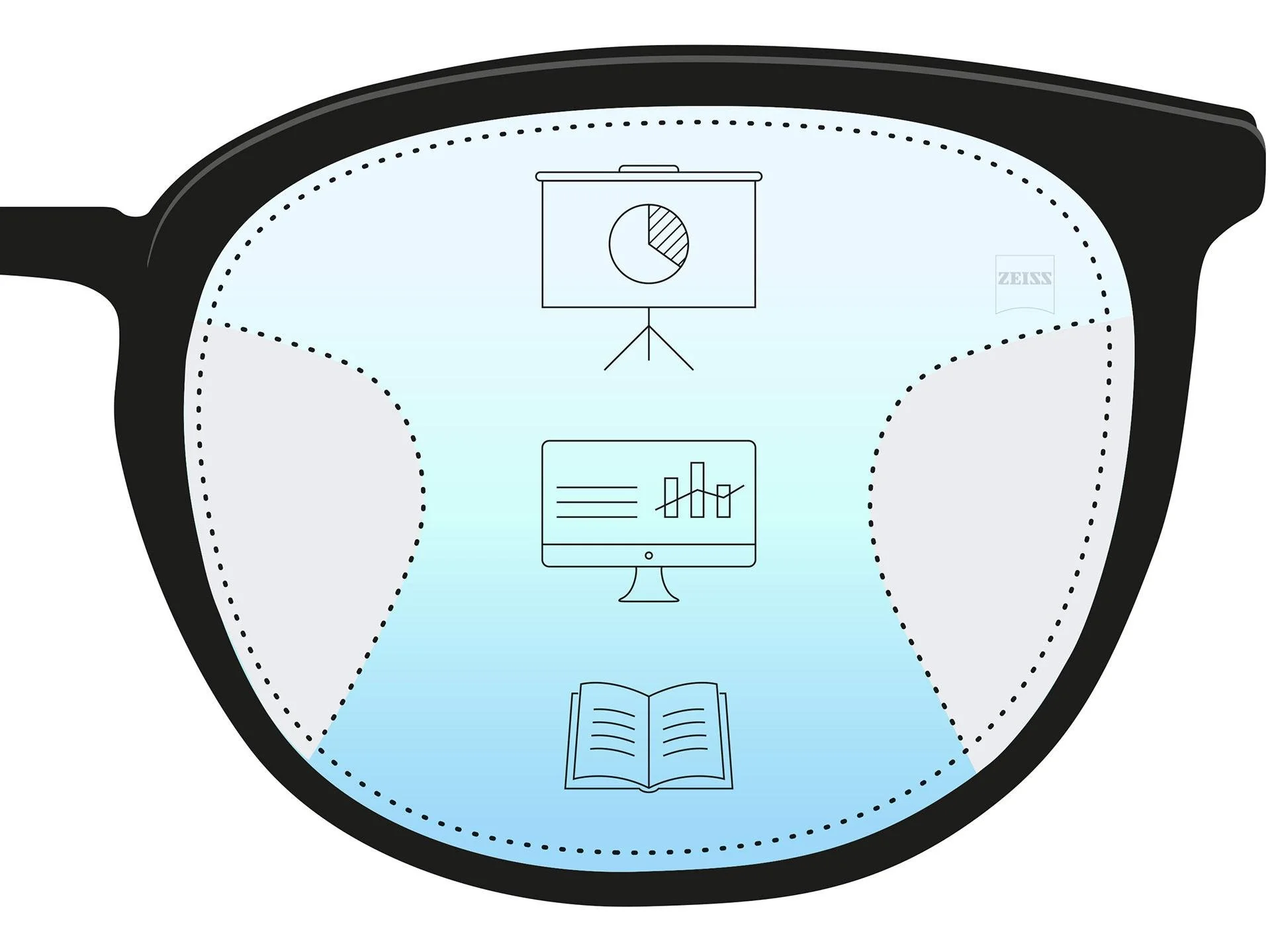
Multifocal Progressive Lens
This progressive lens changed the logic entirely. Rather than distinct zones separated by hard boundaries, a progressive lens creates a continuous gradient of power from the top of the lens to the bottom. Distance correction at the top. A gradual increase in power through the middle, covering the intermediate range. Near correction at the bottom. No lines. No jump. No visible division on the face.
The corridor of clear vision narrows as it descends due to the nature of the design, and in that narrowing lies the challenge. Where the power transitions from one zone to another, some distortion is unavoidable. It is a physical consequence of bending light in multiple directions within a single lens. In early progressive lenses, this distortion was significant. Objects at the edges of the lens would appear to swim or sway as the head moved. Some wearers adapted quickly. Others never did. The technology worked in principle but the optics were limited by what the manufacturing process could achieve at the time.
Conventional vs Freeform
Not all progressive lenses are made the same way. The way a lens is made determines everything about how it performs.
| Conventional Progressive | Freeform · ZEISS SmartLife Individual 3 | |
|---|---|---|
| Design method | Pre-ground from a finite range of standard blanks. Closest match selected for your prescription. | Calculated and cut point-by-point using computer-controlled surfacing, specific to each wearer. |
| Prescription fit | — Approximate. A standard design adapted to your prescription. | ✓ Exact. Calculated for your prescription, frame, and lens position. |
| Peripheral distortion | Pronounced. Swim and sway effect is common, particularly off-centre. | Minimal. Smart Dynamic Optics reduces blur across the lens periphery. |
| Fields of view | Narrow clear corridor. Blurred zones extend across both sides. | ✓ Up to 50% wider fields of clear vision at all distances. |
| Frame optimisation | — Not accounted for. Same lens design regardless of frame chosen. | ✓ FrameFit+ and FaceFit technology calibrated to frame and facial anatomy. |
| Age-specific design | — One-size design. No differentiation by age or visual behaviour. | ✓ Six distinct age clusters. 12.5M data points of real-world visual behaviour. |
| Digital device use | — Not optimised for screen distances or downward gaze angles. | ✓ Age Intelligence accounts for modern screen-heavy visual habits. |
| Adaptation time | Typically weeks. Longer for first-time wearers and higher prescriptions. | ✓ Most wearers fully comfortable within the first week. |
| Centration | Manual measurement. Subject to human error in pupil distance and frame position. | ✓ ZEISS VISUFIT1000 — 45 million data points captured in a single shot. |
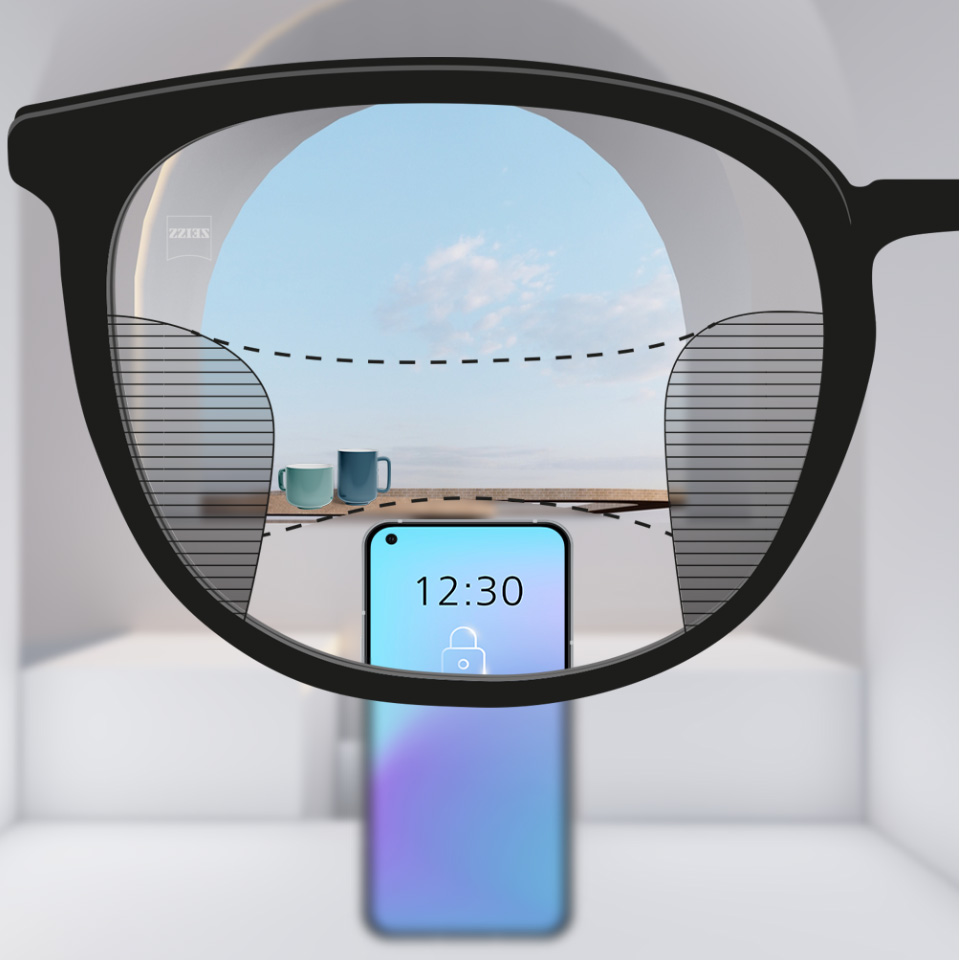
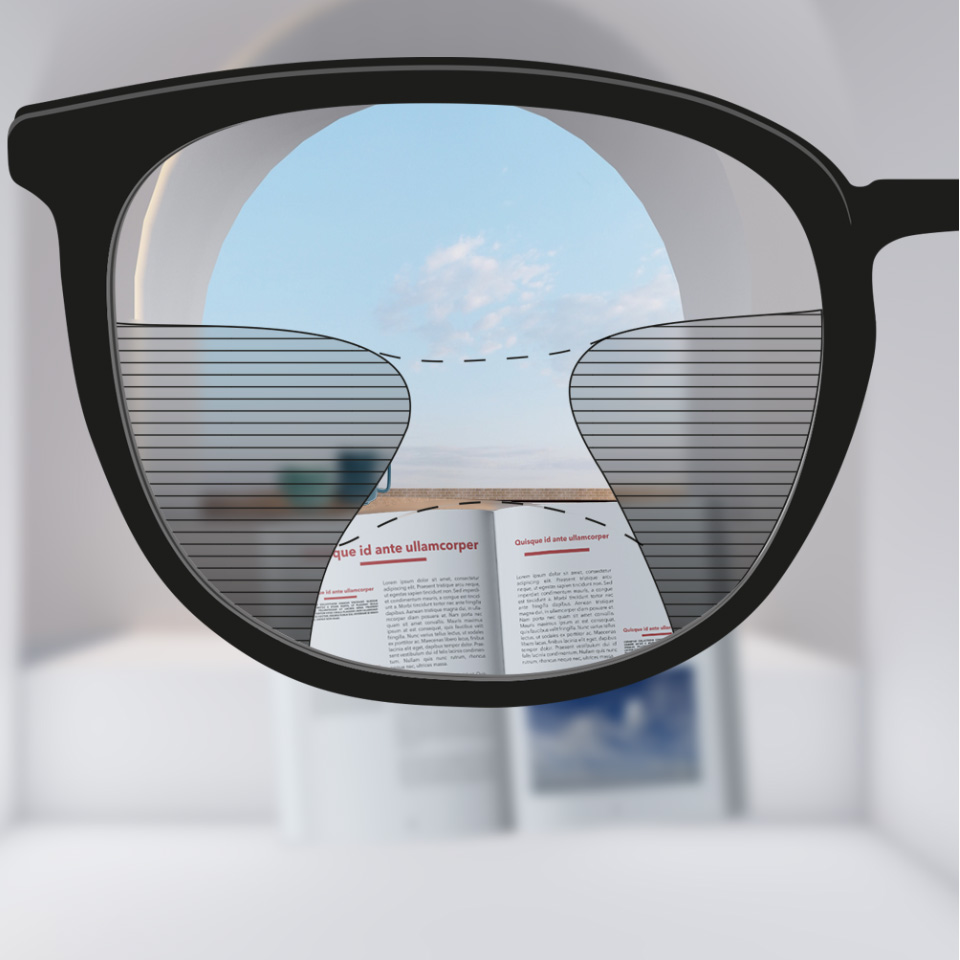
← Drag to compare · Conventional (Left) vs ZEISS SmartLife (Right) →
Precision for sharp vision through advanced eye-modelling research, point-by-point calculation and advanced freeform production.
A design philosophy for strain-free, dynamic vision with fast focus at any distance and in any direction throughout the day.

Sunglass-level UV protection built into clear lenses, blocking harmful UV rays up to 400nm — the same standard as premium sunglasses.

Matches the lens design to each wearer's unique facial anatomy, ensuring the full potential of every lens zone is realised in practice.
Optimises lens performance for the specific frame chosen, so the viewing zones are precisely where they need to be regardless of frame shape or size.
Accounts for vertical eye movement behaviour, comparing the previous frame with the new fitting height to create a convenient near zone location for faster adaptation.
Takes the wearer's main daily activities into account, offering a choice of three lens designs — near, intermediate or balanced — to suit individual needs.
Factors in age-specific pupil size and changing light conditions to optimise the lens surface for clear, comfortable vision from day through to night.
The Right lens for the Right Person
Lenses that address both near and far have come a long way but the underlying problem is unchanged. One pair of eyes, multiple focal distances, one lens. What has changed is the precision with which that problem is solved.
A conventional progressive addresses it adequately. A freeform progressive addresses it well. A freeform progressive designed specifically for your eyes, your frame, and your visual behaviour, fitted with precision centration, addresses it as completely as current optical science allows.
At Ocular & Eyes, ZEISS progressive lenses are available across our Sydney CBD and Chatswood locations. Our optometrists will help identify the right lens for your prescription, your lifestyle, and your frame, fitting it with the accuracy the lens deserves.